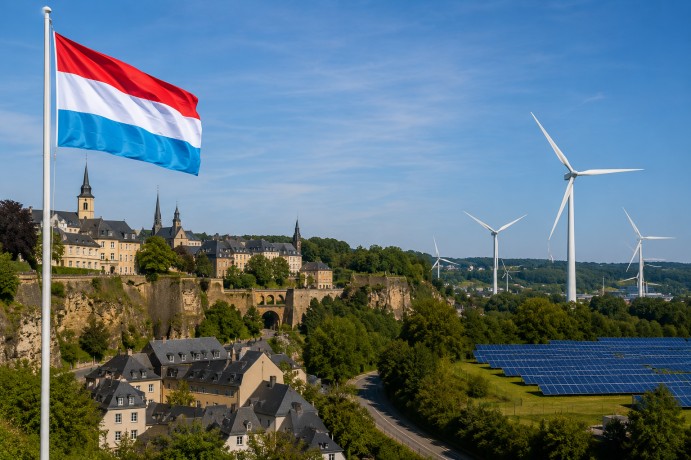
In 2025, Luxembourg found itself lagging behind most European Union nations in terms of renewable electricity consumption, according to the latest data from Eurostat. The country’s performance placed it among the bottom three EU countries, despite a broader trend of increased renewable energy use across Europe. Specifically, Luxembourg’s renewable sources accounted for just 20.2% of its gross final energy consumption, highlighting its challenge in keeping pace with regional advancements.
When it comes to electricity consumption from renewable sources, Luxembourg’s numbers were similarly low, with only 23.3% of its gross electricity consumption being derived from renewables. This figure positioned the country just above Czechia and Malta, which were the only EU nations with a smaller share of renewable electricity consumption.
Across the European Union, the push towards renewable energy has seen significant progress. By 2025, renewable energy made up 26.2% of the bloc’s gross final energy consumption, a notable increase from 9.6% in 2004. The EU has set an ambitious target to raise this percentage to 42.5% by the year 2030, underlining its commitment to reducing reliance on fossil fuels and enhancing environmental sustainability.
Leading the charge in the transition to renewable energy within the EU is Sweden, where 65.4% of its overall energy consumption comes from renewable sources. Following closely are Finland and Denmark, both of which have made substantial strides in integrating renewables into their energy mixes. In terms of electricity, Austria stands out with over 90% of its electricity being generated from renewable sources, making it the top performer in this category.