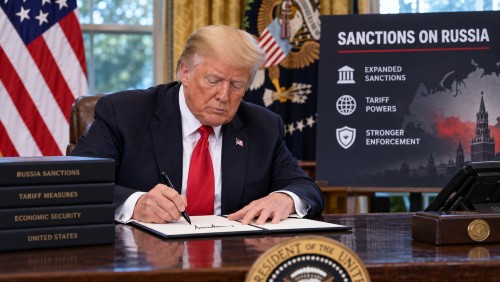
Amidst escalating geopolitical tensions, the United States has intensified its economic pressure on Russia and Iran. This strategic move comes in the form of new legislation signed into law by President Donald Trump, aimed at expanding and strengthening sanctions. The law not only extends existing sanctions on Iran but also introduces extensive measures against Russia, targeting officials and financial networks linked to its war efforts, as well as its oil and gas revenue streams.
Central to this legislative action is the provision granting President Trump the authority to impose tariffs of up to 100% on countries that continue to purchase Russian energy. This measure provides the administration with broad discretion to determine which nations will be subject to these tariffs and allows for the possibility of waiving certain sanctions. The law, which received bipartisan support in the House of Representatives, was signed into effect on September 18.
The potential implications of this law are significant, especially for major consumers of Russian energy like India and China. As the U.S. government decides how to implement these new powers, the global energy market may experience notable shifts. The White House has emphasized that the legislation enhances the United States’ ability to apply economic pressure on Russia, thereby attempting to curtail its capacity to finance military operations through energy exports.
This development marks a critical juncture in U.S. foreign policy, as the Trump administration seeks to leverage economic tools to influence international behavior. The extended sanctions on Iran also signify a continued stance of pressure on Tehran, aligning with broader U.S. objectives in the region. As the international community reacts, the effectiveness and repercussions of these sanctions will be closely monitored by both allies and adversaries.