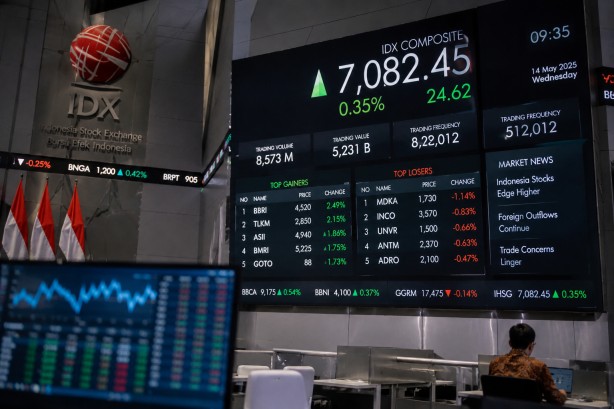
Throughout the week ending July 24, Indonesia’s Jakarta Composite Index (JCI) experienced a 0.34% rise, driven by increased trading activity. This boost occurred despite the ongoing withdrawal of foreign investors and the overarching uncertainties in the global economic landscape.
The Indonesia Stock Exchange witnessed its market capitalization climb to Rp 10,870 trillion. Meanwhile, the average daily trading turnover saw a significant jump, increasing by 41% to reach Rp 19.76 trillion. Despite these positive movements, foreign investors continued to be net sellers, contributing to an outflow that has totaled Rp 79.09 trillion for the year to date. This outflow underscores a cautious approach toward Indonesian investments.
The market’s sentiment has been affected by several international factors. Notably, rising global oil prices have added to the pressure, spurred by escalating tensions in the Middle East. Compounding these challenges are new tariffs imposed by the United States on imports from various trading partners, which include a 10% tariff on certain goods originating from Indonesia.
Indonesia’s Finance Ministry has acknowledged the potential strain that increased oil prices could place on the 2026 state budget. Nevertheless, officials maintain that the nation’s overall fiscal stance remains robust and stable, offering some reassurance amidst the broader economic concerns.