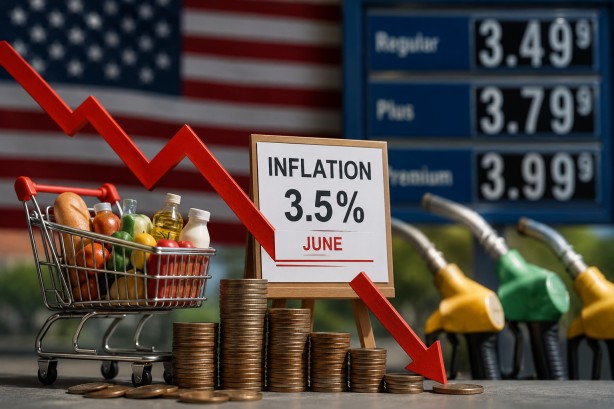
Inflation in the United States eased to 3.5% in June, marking a slowdown primarily driven by a temporary drop in energy prices, which helped to lower overall consumer costs. The recent data from the Consumer Price Index (CPI) highlights this deceleration in inflation, following a period of higher levels in the preceding months. In fact, consumer prices saw a 0.8% decrease compared to May, with the most significant contributions to this decline coming from reduced gasoline and fuel prices, which managed to counterbalance rising costs in areas such as food, housing, and utilities.
Core inflation, which strips away the more volatile food and energy prices and is a key metric for the Federal Reserve, showed a slight reduction, registering at 2.6% annually. Despite this moderation, the relief may be short-lived as geopolitical tensions in the Middle East have once again driven global oil prices upward. This surge in crude oil prices is already being felt by consumers facing higher fuel costs, and industries like aviation and transportation are grappling with increased operational expenses.
As the Federal Reserve prepares for its policy meeting later this month, the latest inflation data will be a critical component of their assessment, alongside labor market conditions. Although there has been a noted reduction in inflation, it still surpasses the Federal Reserve’s long-term target of 2%, creating ambiguity around when future interest rate adjustments might occur.
The interplay between fluctuating energy prices and broader economic conditions continues to pose challenges for policymakers. While the temporary reprieve in inflation offers some hope, the underlying pressures from external factors such as global oil market dynamics underscore the complexity of maintaining price stability. The Federal Reserve’s decisions in the coming weeks will be closely watched as they navigate these competing influences in pursuit of their economic objectives.