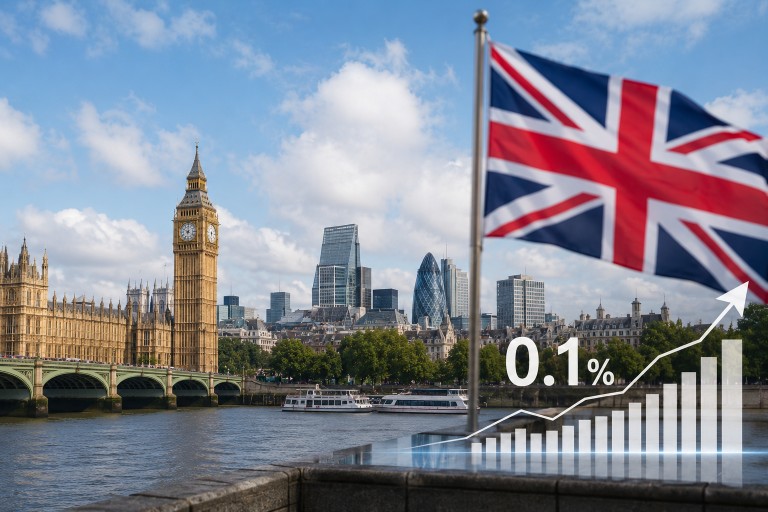
The United Kingdom’s economy saw a slight uptick with a growth of 0.1% in May, bouncing back from an equivalent decline in April. This modest recovery was largely attributed to a 0.3% rise in the services sector, which managed to counterbalance reductions in other areas. Notably, the production sector experienced a 0.5% downturn, while construction activity decreased by 0.8%. Among the various sectors, scientific research and development stood out, recording a significant 5.1% increase for the month.
Over a broader scope, the three-month period ending in May saw the UK economy expand by 0.7%. This was a slight deceleration from the 0.8% growth observed in the preceding three months. Despite this slowdown, the economy displayed signs of resilience in the face of external pressures such as elevated energy prices and uncertainties stemming from geopolitical tensions in the Middle East.
Economists have pointed out that while the UK economy has managed to withstand some of these challenges, potential risks linger due to the ongoing issues of rising energy costs and persistent supply chain disruptions. These factors continue to cast a shadow over the future growth prospects, despite the current positive indications.
In a recent development, the International Monetary Fund (IMF) revised its forecast for the UK’s economic growth, raising it to 1% for the current year. Nonetheless, analysts maintain a cautious outlook, highlighting the persistent uncertainties related to global geopolitical tensions that could impact future economic performance.